


Microsoft DP-300 Test Engine Dumps Training With 373 Questions
DP-300 Questions Pass on Your First Attempt Dumps for Microsoft Azure Certified
The DP-300 certification exam is intended for database administrators who have experience with SQL Server on-premises and want to expand their skills to the cloud. DP-300 exam covers a wide range of topics, including designing and implementing Azure SQL Database, managing databases and instances, implementing security features, monitoring and optimizing performance, and implementing high availability and disaster recovery solutions.
NEW QUESTION # 120
You have an Azure Data Factory instance named ADF1 and two Azure Synapse Analytics workspaces named WS1 and WS2.
ADF1 contains the following pipelines:
P1:Uses a copy activity to copy data from a nonpartitioned table in a dedicated SQL pool of WS1 to an Azure Data Lake Storage Gen2 account P2:Uses a copy activity to copy data from text-delimited files in an Azure Data Lake Storage Gen2 account to a nonpartitioned table in a dedicated SQL pool of WS2 You need to configure P1 and P2 to maximize parallelism and performance.
Which dataset settings should you configure for the copy activity of each pipeline? To answer, select the appropriate options in the answer area.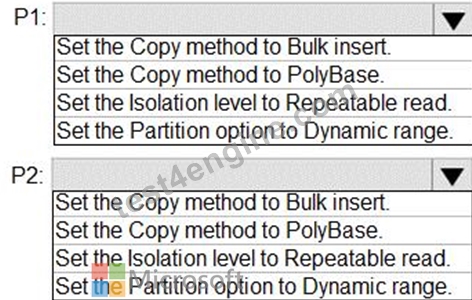
Answer:
Explanation: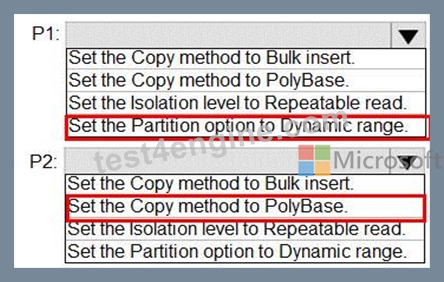
Reference:
https://docs.microsoft.com/en-us/azure/data-factory/connector-azure-sql-data-warehouse
https://docs.microsoft.com/en-us/azure/data-factory/load-azure-sql-data-warehouse
NEW QUESTION # 121
You have a SQL Server on Azure Virtual Machines instance that hosts a database named Db1.
You need to configure the autogrow and autoshrink settings for DB1.
Which statements should you use? To answer, select the appropriate options in the answer area.
NOTE: Each correct selection is worth one point.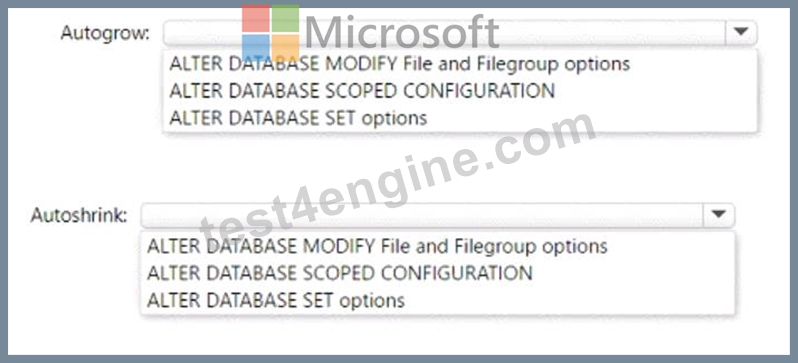
Answer:
Explanation: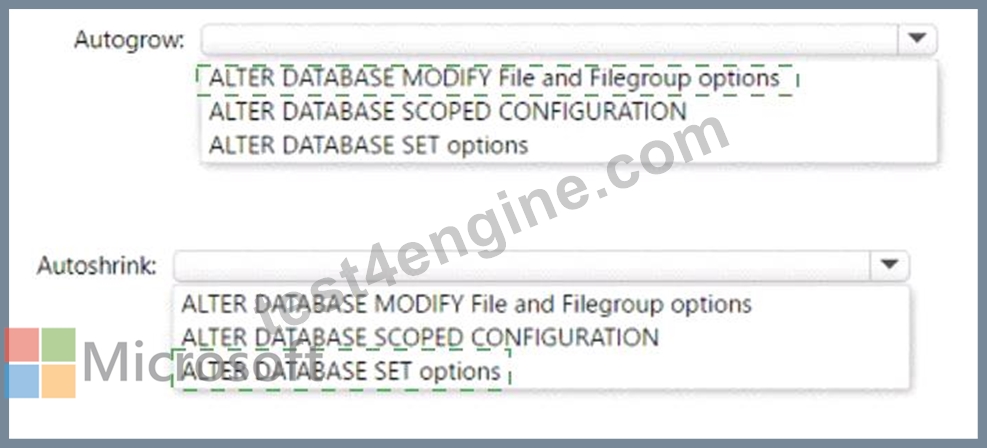
Explanation: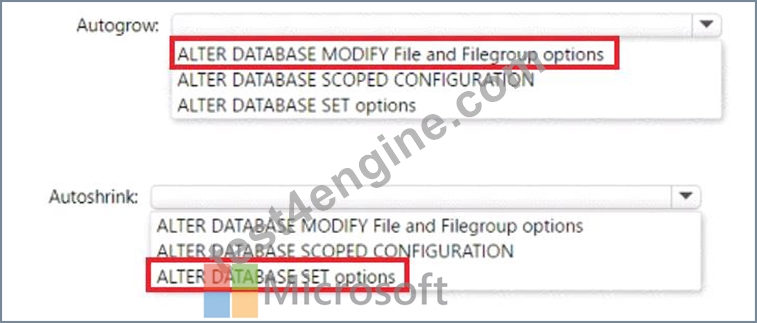
https://learn.microsoft.com/en-us/troubleshoot/sql/admin/considerations-autogrow-autoshrink
NEW QUESTION # 122
You have an Azure SQL database named D61.
You need to identify how much unused space in megabytes was allocated to DB1.
How should you complete the Transact-SQL query? To answer select the appropriate options m the answer area.
NOTE: Each correct selection is worth one point.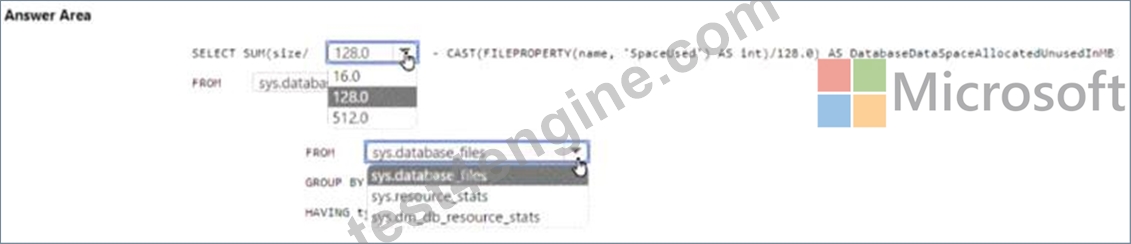
Answer:
Explanation:
Explanation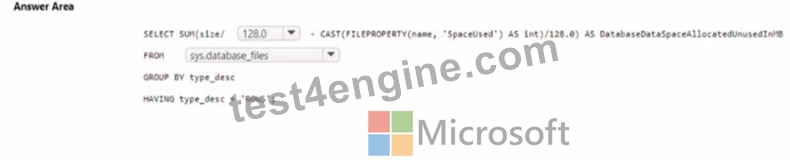
NEW QUESTION # 123
You have an Azure Synapse Analytics dedicated SQL pool named Pool1 and an Azure Data Lake Storage Gen2 account named Account1.
You plan to access the files in Account1 by using an external table.
You need to create a data source in Pool1 that you can reference when you create the external table.
How should you complete the Transact-SQL statement? To answer, select the appropriate options in the answer area.
NOTE: Each correct selection is worth one point.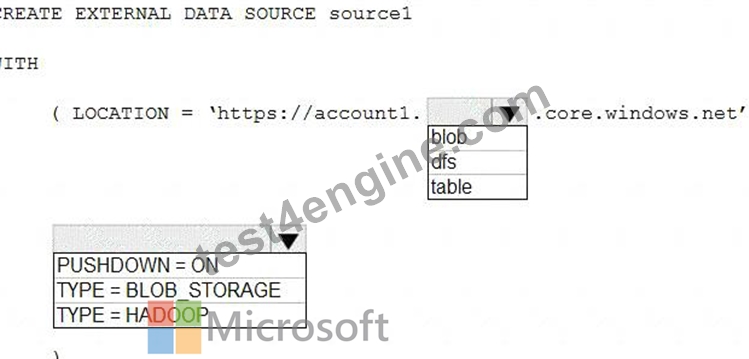
Answer:
Explanation: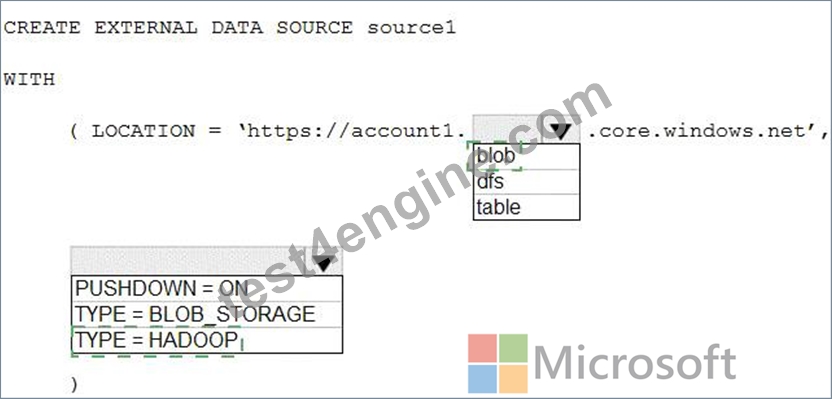
Explanation
Graphical user interface, table Description automatically generated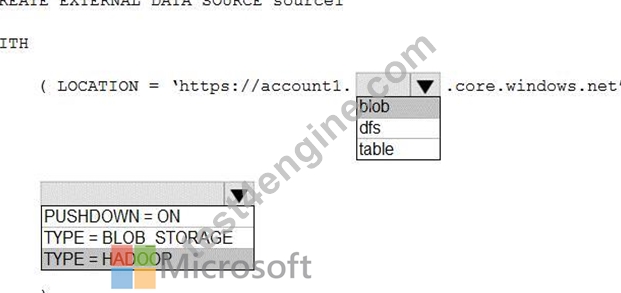
Box 1: blob
The following example creates an external data source for Azure Data Lake Gen2 CREATE EXTERNAL DATA SOURCE YellowTaxi WITH ( LOCATION = 'https://azureopendatastorage.blob.core.windows.net/nyctlc/yellow/', TYPE = HADOOP) Box 2: HADOOP Reference:
https://docs.microsoft.com/en-us/azure/synapse-analytics/sql/develop-tables-external-tables
NEW QUESTION # 124
You have a Microsoft SQL Server 2019 database named DB1 and an Azure SQL managed instance named SQLMI1. You need to move a SQL Server Agent job from DB1 to SQLMI1. Which job attribute is unsupported in SQLMI1?
- A. email notifications
- B. log to table
- C. schedules
- D. output files
Answer: D
NEW QUESTION # 125
You have an Azure Synapse Analytics dedicated SQL pool named Pool1 and a database named DB1. DB1 contains a fact table named Table.
You need to identify the extent of the data skew in Table1.
What should you do in Synapse Studio?
- A. Connect to the built-in pool and query sys.dm_pdw_nodes_db_partition_stats.
- B. Connect to the built-in pool and run DBCC CHECKALLOC.
- C. Connect to Pool1 and query sys.dm_pdw_nodes_db_partition_stats.
- D. Connect to Pool1 and run DBCC CHECKALLOC.
Answer: A
Explanation:
Section: [none]
Explanation:
Use sys.dm_pdw_nodes_db_partition_stats to analyze any skewness in the data.
Reference:
https://docs.microsoft.com/en-us/azure/synapse-analytics/sql-data-warehouse/cheat-sheet
NEW QUESTION # 126
You have a Microsoft SQL Server 2017 server that hosts five databases.
You Plan to migrate the databases to Azure.
You need to recommend a solution that meets the following requirements:
* Automatically scales compute based on the workload demand
* Provides per-second billing
What should you include in the recommendation? To answer, select the appropriate options in the answer area.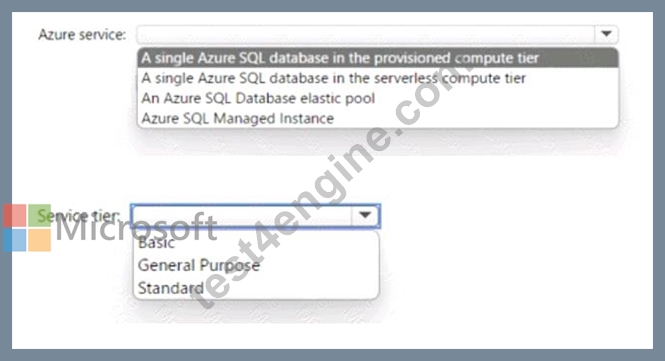
Answer:
Explanation: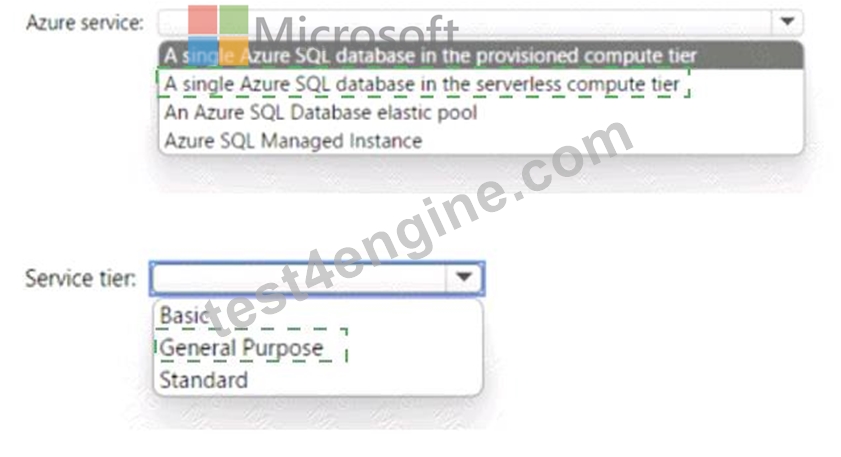
Explanation: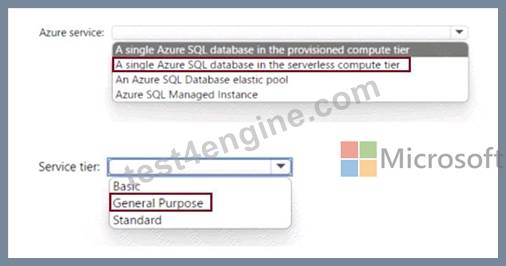
NEW QUESTION # 127
You need to recommend the appropriate purchasing model and deployment option for the 30 new databases.
The solution must meet the technical requirements and the business requirements.
What should you recommend? To answer, select the appropriate options in the answer area.
NOTE: Each correct selection is worth one point.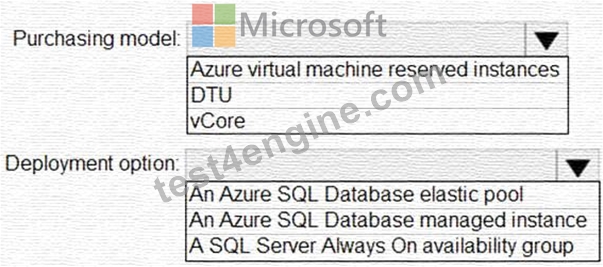
Answer:
Explanation: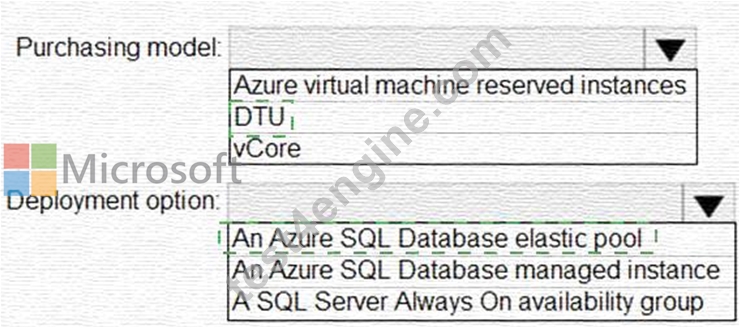
Explanation: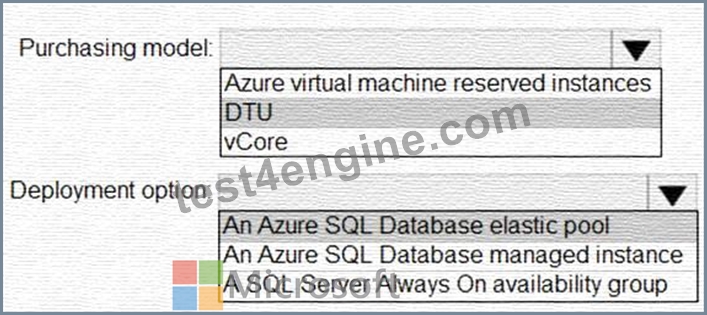
Box 1: DTU
Scenario:
* The 30 new databases must scale automatically.
* Once all requirements are met, minimize costs whenever possible.
You can configure resources for the pool based either on the DTU-based purchasing model or the vCore-based purchasing model.
In short, for simplicity, the DTU model has an advantage. Plus, if you're just getting started with Azure SQL Database, the DTU model offers more options at the lower end of performance, so you can get started at a lower price point than with vCore.
Box 2: An Azure SQL database elastic pool
Azure SQL Database elastic pools are a simple, cost-effective solution for managing and scaling multiple databases that have varying and unpredictable usage demands. The databases in an elastic pool are on a single server and share a set number of resources at a set price. Elastic pools in Azure SQL Database enable SaaS developers to optimize the price performance for a group of databases within a prescribed budget while delivering performance elasticity for each database.
Reference:
https://docs.microsoft.com/en-us/azure/azure-sql/database/elastic-pool-overview
https://docs.microsoft.com/en-us/azure/azure-sql/database/reserved-capacity-overview
NEW QUESTION # 128
You have an Azure subscription that contains an Azure SQL database named SQL1.
SQL1 is in an Azure region that does not support availability zones.
You need to ensure that you have a secondary replica of SQLI in the same region.
What should you use?
- A. Microsoft SQL Server failover clusters
- B. active geo-replication
- C. log shipping
- D. auto-failover groups
Answer: B
Explanation:
Active geo-replication is a feature that lets you create a continuously synchronized readable secondary database for a primary database. The readable secondary database may be in the same Azure region as the primary, or, more commonly, in a different region. This kind of readable secondary database is also known as a geo-secondary or geo-replica.
https://learn.microsoft.com/en-us/azure/azure-sql/database/active-geo-replication-overview?source=recommendations&view=azuresql
NEW QUESTION # 129
You are building an Azure Stream Analytics job to retrieve game data.
You need to ensure that the job returns the highest scoring record for each five-minute time interval of each game.
How should you complete the Stream Analytics query? To answer, select the appropriate options in the answer area.
NOTE: Each correct selection is worth one point.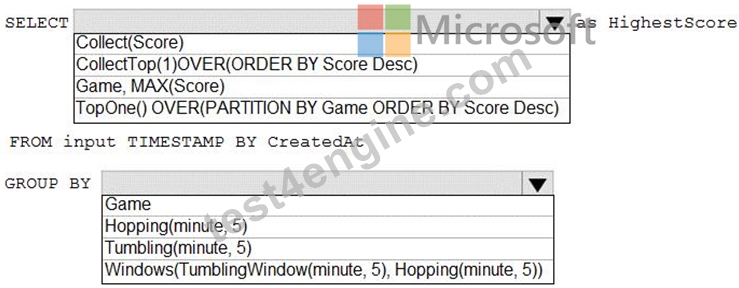
Answer:
Explanation: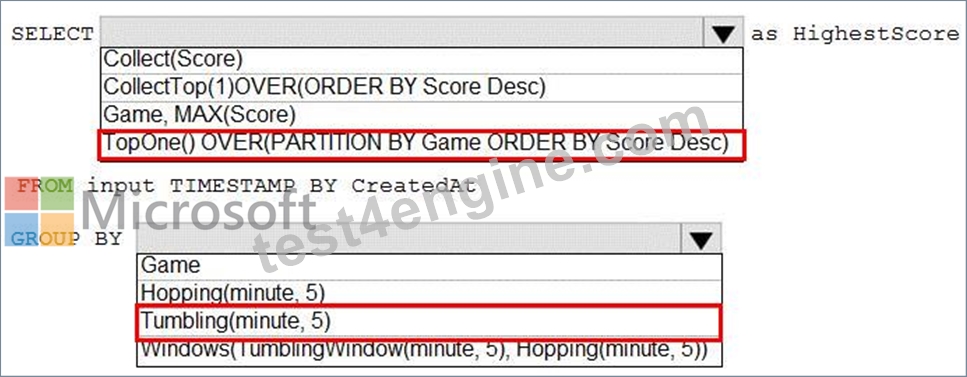
Reference:
https://docs.microsoft.com/en-us/stream-analytics-query/topone-azure-stream-analytics
https://github.com/MicrosoftDocs/azure-docs/blob/master/articles/stream-analytics/stream-analytics-window-functions.md
NEW QUESTION # 130
HOTSPOT
You have an Azure SQL database named db1.
You need to retrieve the resource usage of db1 from the last week.
How should you complete the statement? To answer, select the appropriate options in the answer area.
NOTE: Each correct selection is worth one point.
Hot Area: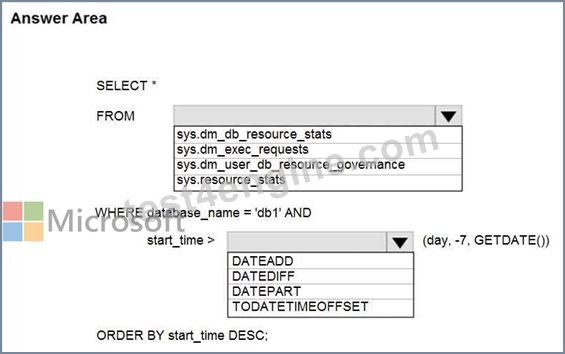
Answer:
Explanation:
Section: [none]
Explanation:
Box 1: sys.resource_stats
sys.resource_stats returns CPU usage and storage data for an Azure SQL Database. It has database_name
and start_time columns.
Box 2: DateAdd
The following example returns all databases that are averaging at least 80% of compute utilization over the last
one week.
DECLARE @s datetime;
DECLARE @e datetime;
SET @s= DateAdd(d,-7,GetUTCDate());
SET @e= GETUTCDATE();
SELECT database_name, AVG(avg_cpu_percent) AS Average_Compute_Utilization
FROM sys.resource_stats
WHERE start_time BETWEEN @s AND @e
GROUP BY database_name
HAVING AVG(avg_cpu_percent) >= 80
Incorrect Answers:
sys.dm_exec_requests:
sys.dm_exec_requests returns information about each request that is executing in SQL Server. It does not
have a column named database_name.
sys.dm_db_resource_stats:
sys.dm_db_resource_stats does not have any start_time column.
Note: sys.dm_db_resource_stats returns CPU, I/O, and memory consumption for an Azure SQL Database
database. One row exists for every 15 seconds, even if there is no activity in the database. Historical data is
maintained for approximately one hour.
Sys.dm_user_db_resource_governance returns actual configuration and capacity settings used by resource
governance mechanisms in the current database or elastic pool. It does not have any start_time column.
Reference:
https://docs.microsoft.com/en-us/sql/relational-databases/system-catalog-views/sys-resource-stats-azure-sql-
database
NEW QUESTION # 131
You have an Azure SQL database named DB1.
You have a table name Table1 that has 20 columns of type CHAR(400). Row compression for Table1 is enabled.
During a database audit, you discover that none of the fields contain more than 150 characters.
You need to ensure that you can apply page compression to Table1.
What should you do?
- A. Change the column type to nvarchar (MAX).
- B. Configure the columns as sparse.
- C. Change the column type to varchar (MAX).
- D. Change the column type to varchar (200).
Answer: D
Explanation:
Reference:
https://www.sqlshack.com/sql-varchar-data-type-deep-dive/
https://36chambers.wordpress.com/2020/06/18/nvarchar-everywhere-a-thought-experiment/
NEW QUESTION # 132
SIMULATION
You need to provide a user named user2-12345678 with the ability to back up and restore databases and change the compute setting of the databases located on a server named sql12345678. User2-12345678 must be prevented from connecting to the databases and modifying database server settings. The solution must minimize administrative effort.
To complete this task, sign in to the virtual machine. You may need to use SQL Server Management Studio and the Azure portal.
Answer:
Explanation: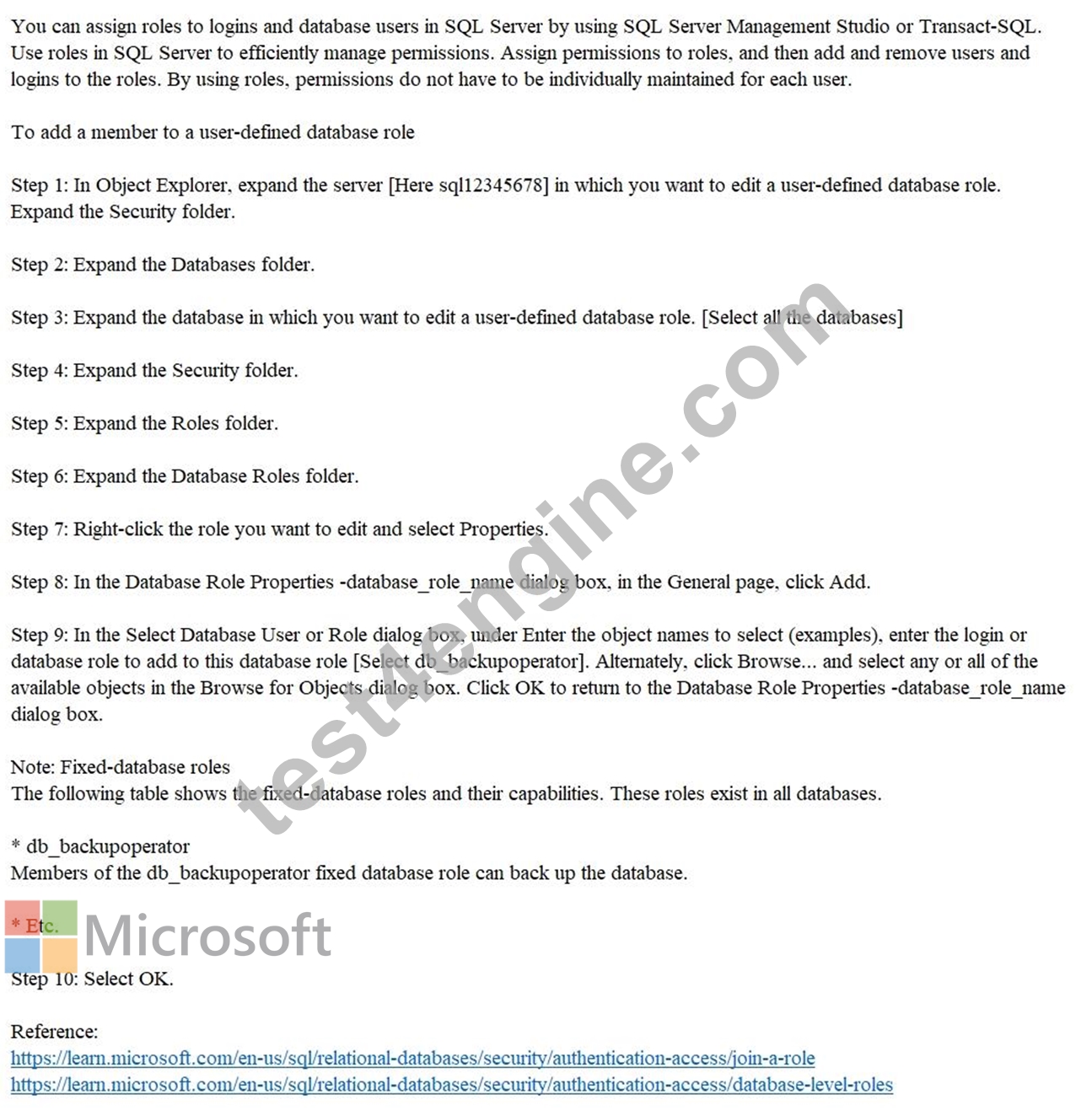
NEW QUESTION # 133
You have an Azure subscription that is linked to an Azure AD tenant named contoso.com. The subscription contains an Azure SQL database named SQL 1 and an Azure web named app1. App1 has the managed identity feature enabled.
You need to create a new database user for app1.
How should you complete the Transact-SQL statement? To answer, select the appropriate options in the answer area.
NOTE: Each correct selection is worth one point.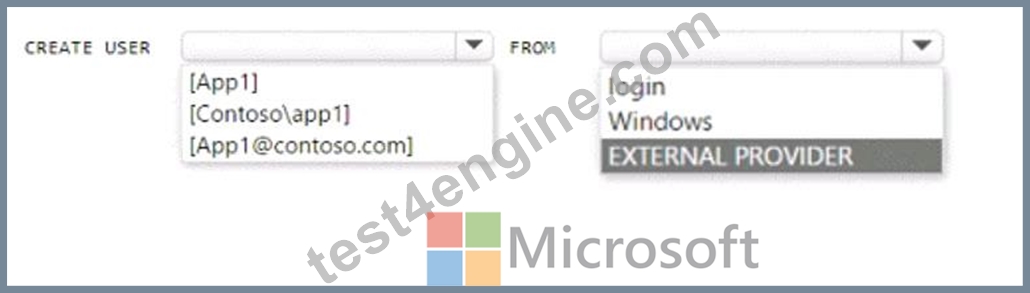
Answer:
Explanation: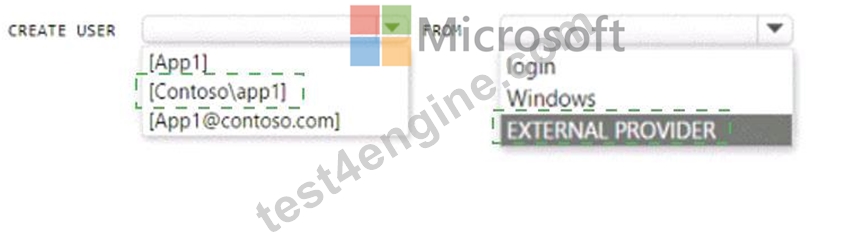
Explanation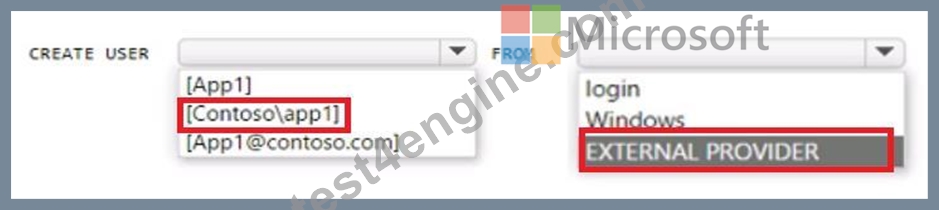
https://learn.microsoft.com/en-us/azure/app-service/tutorial-connect-msi-sql-database?tabs=windowsclient%2Ce
NEW QUESTION # 134
You have a resource group named App1Dev that contains an Azure SQL Database server named DevServer1. DevServer1 contains an Azure SQL database named DB1. The schema and permissions for DB1 are saved in a Microsoft SQL Server Data Tools (SSDT) database project.
You need to populate a new resource group named App1Test with the DB1 database and an Azure SQL Server named TestServer1. The resources in App1Test must have the same configurations as the resources in App1Dev.
Which four actions should you perform in sequence? To answer, move the appropriate actions from the list of actions to the answer area and arrange them in the correct order.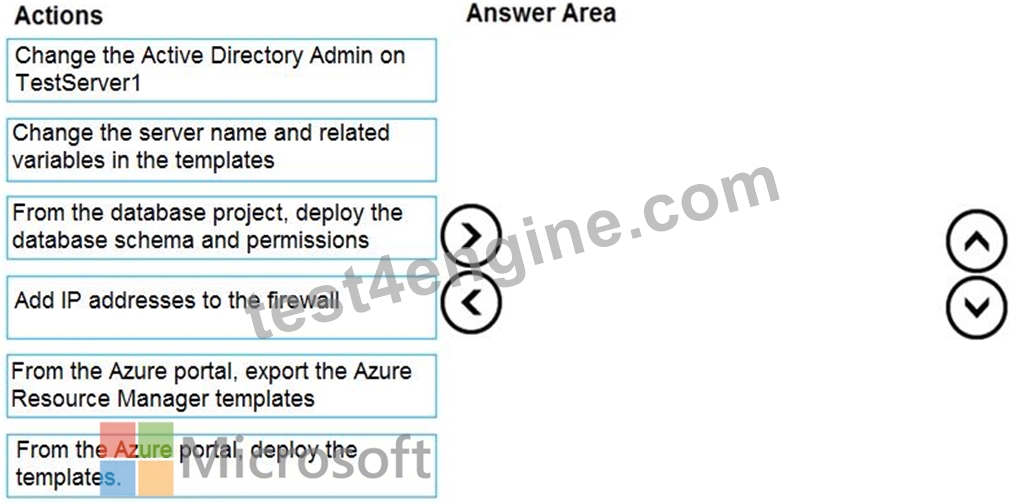
Answer:
Explanation:
1 - From the Azure portal, export the Azure Resource Manager templates
2 - Change the server name and related variables in the templates
3 - From the Azure portal, deploy the templates.
4 - From the database project, deploy the database schema and permissions
NEW QUESTION # 135
You have an Azure SQL database.
You have a query and the associated execution plan as shown in the following exhibit.
Use the drop-down menus to select the answer choice that completes each statement based on the information presented in the graphic.
NOTE: Each correct selection is worth one point.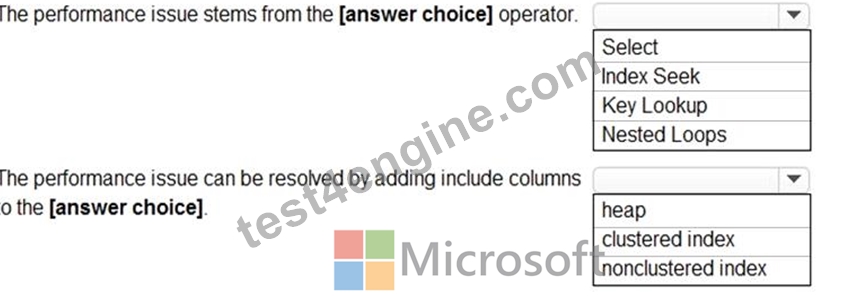
Answer:
Explanation:
NEW QUESTION # 136
You have an Azure SQL database named DB1 in the General Purpose service tier.
You need to monitor D81 by using SQL insights.
What should you include in the solution? To answer, select the appropriate options in the answer area.
NOTE: Each correct selection is worth one point.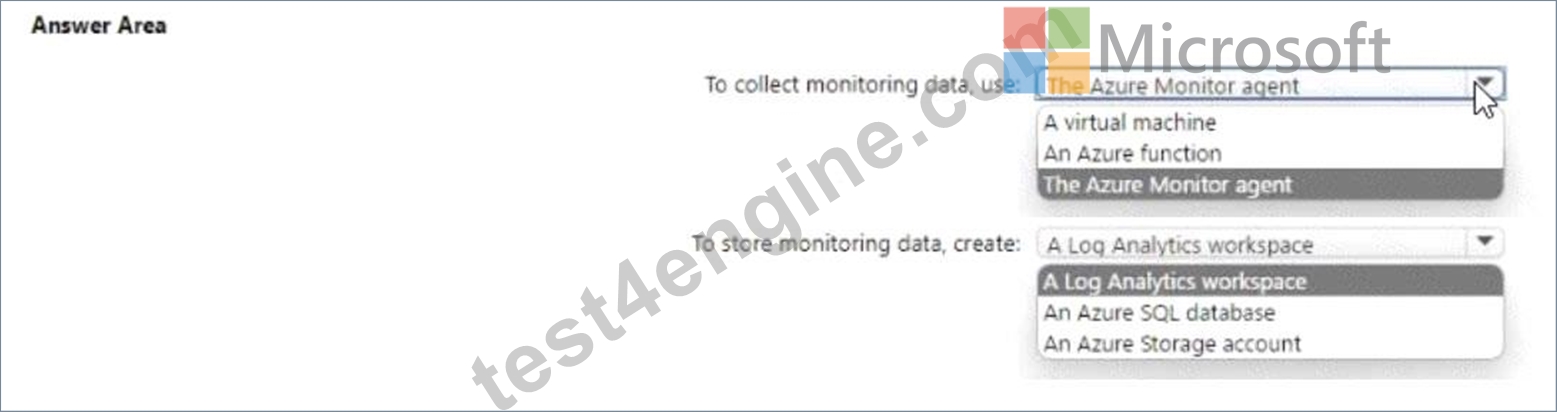
Answer:
Explanation: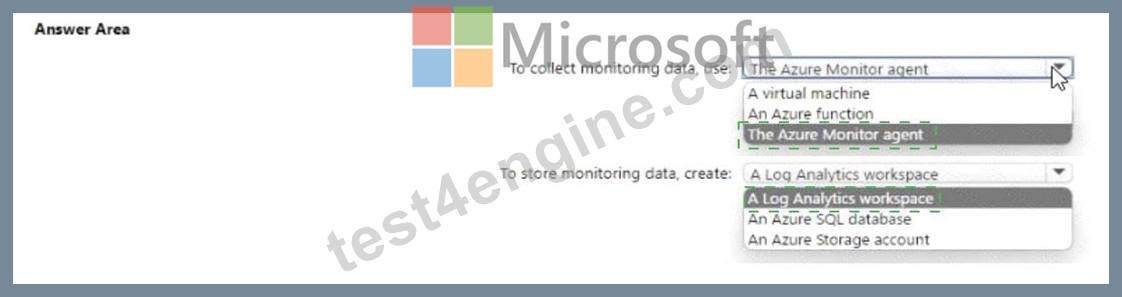
Explanation
NEW QUESTION # 137
You need to configure user authentication for the SERVER1 databases. The solution must meet the security and compliance requirements.
Which three actions should you perform in sequence? To answer, move the appropriate actions from the list of actions to the answer area and arrange them in the correct order.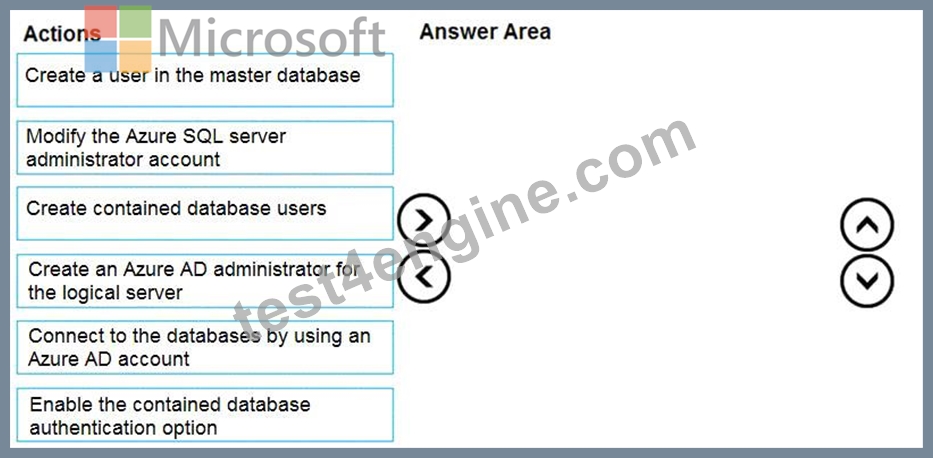
Answer:
Explanation: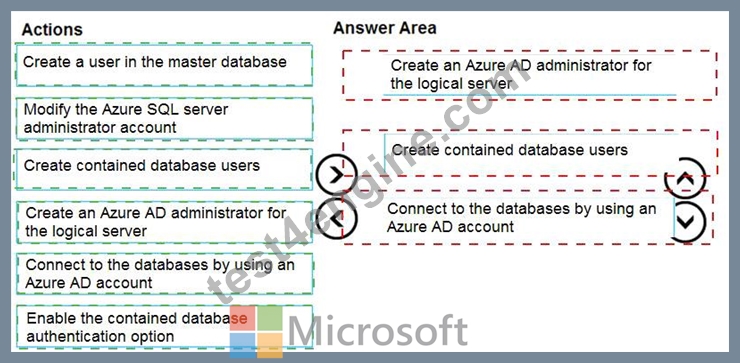
Explanation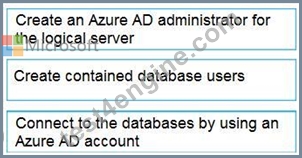
Scenario: Authenticate database users by using Active Directory credentials.
The configuration steps include the following procedures to configure and use Azure Active Directory authentication.
Create and populate Azure AD.
Optional: Associate or change the active directory that is currently associated with your Azure Subscription.
Create an Azure Active Directory administrator. (Step 1)
Configure your client computers.
Create contained database users in your database mapped to Azure AD identities. (Step 2) Connect to your database by using Azure AD identities. (Step 3) Reference:
https://docs.microsoft.com/en-us/azure/azure-sql/database/authentication-aad-overview
NEW QUESTION # 138
......
The Microsoft DP-300 is also known as Administering Relational Databases on Microsoft Azure. It is a broad step towards emerging as a top-notch Microsoft accredited Azure Database Administrator Associate. As a rule, this test has mainly been conducted to check out an aspirant’s capability to perform countless tasks, such as implementing a safe environment, analyzing and improving various operational supplies, improving query performance, performing administration by utilizing T-SQL, planning, incorporating resources of data platform, and finally accomplishing automation of tasks.
DP-300 Practice Test Pdf Exam Material: https://troytec.test4engine.com/DP-300-real-exam-questions.html